
Invasive alien species are among the leading threats to global biodiversity. Their introduction—often accidental or linked to human activity—can disrupt the delicate balance of ecosystems, especially in freshwater environments, where native species are often less adaptable and more vulnerable to ecological change.
In Italy, particularly in urban and peri-urban areas such as those surrounding Rome, several non-native aquatic species have become established, with significant consequences for local fauna. Among the most problematic are:
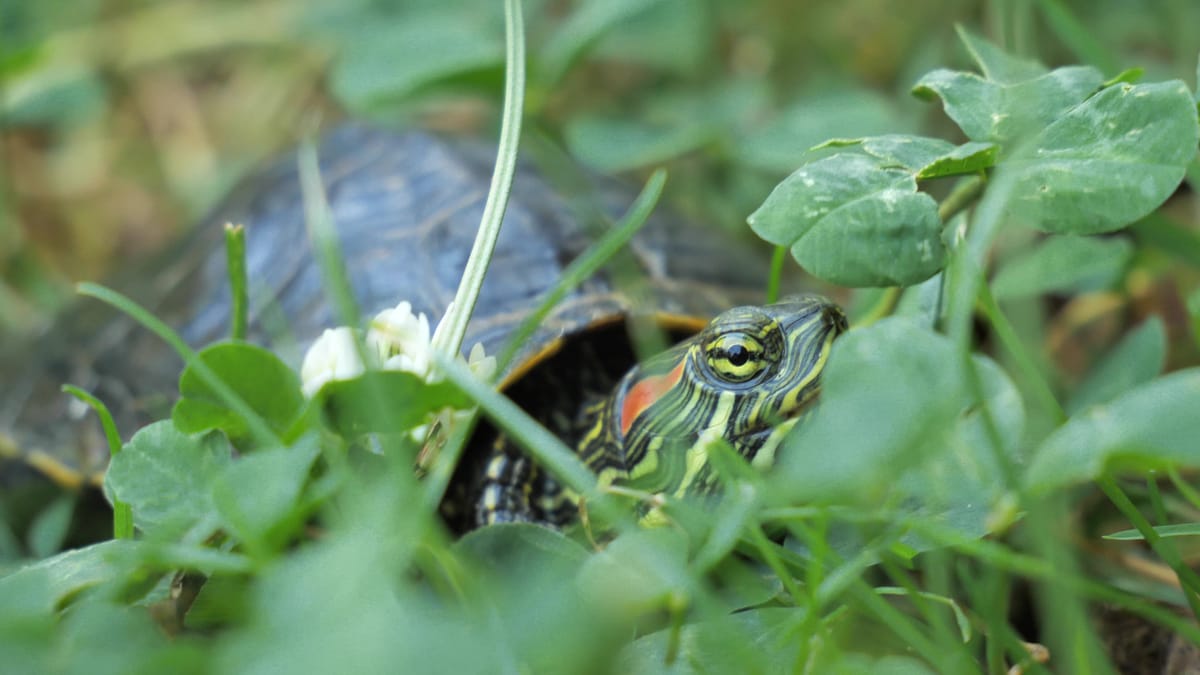
- the red-eared slider (Trachemys scripta), an American freshwater turtle commonly released from the pet trade;
- the mosquitofish (Gambusia spp.), introduced for mosquito control;
- the goldfish (Carassius auratus), often abandoned in public ponds;
- the largemouth bass (Micropterus salmoides) and the pumpkinseed sunfish (Lepomis gibbosus), both introduced for sport fishing.
These species exert pressure on native communities through predation, competition, habitat alteration, and in some cases, pathogen transmission. Their impacts are especially severe in small and enclosed aquatic systems, like urban ponds and historical fountains.
Impact on amphibians
The effect on amphibians is particularly alarming. Native species—already under pressure from habitat fragmentation, pollution, and climate change—suffer greatly from the presence of invasive fauna. For example:
- Mosquitofish prey directly on amphibian eggs and larvae.
- Red-eared sliders also prey directly on eggs, larvae and adults
- Largemouth bass and pumpkinseed sunfish consume both larvae and adult amphibians, acting as top predators in ecosystems where amphibians once had few natural enemies.
Invasive aquatic plants, such as Azolla filiculoides and especially Lemna minuta, further compound the problem by forming dense vegetation that reduces oxygen levels, blocks sunlight, and restricts amphibian movement and breeding activity.
The growing presence of these invasive species in urban green areas, including historic park ponds, highlights how human-mediated introductions are driving biotic homogenization and threatening local biodiversity. Their control is essential not only to protect native fauna, but also to preserve the ecological functionality of urban freshwater habitats.
As part of our ongoing conservation efforts, we are actively monitoring and removing invasive species from the Botanical Garden of Rome while working to restore and enhance habitat conditions for native amphibians. Our aim is to promote resilient, biodiverse, and functional aquatic communities, even within the boundaries of a modern city