
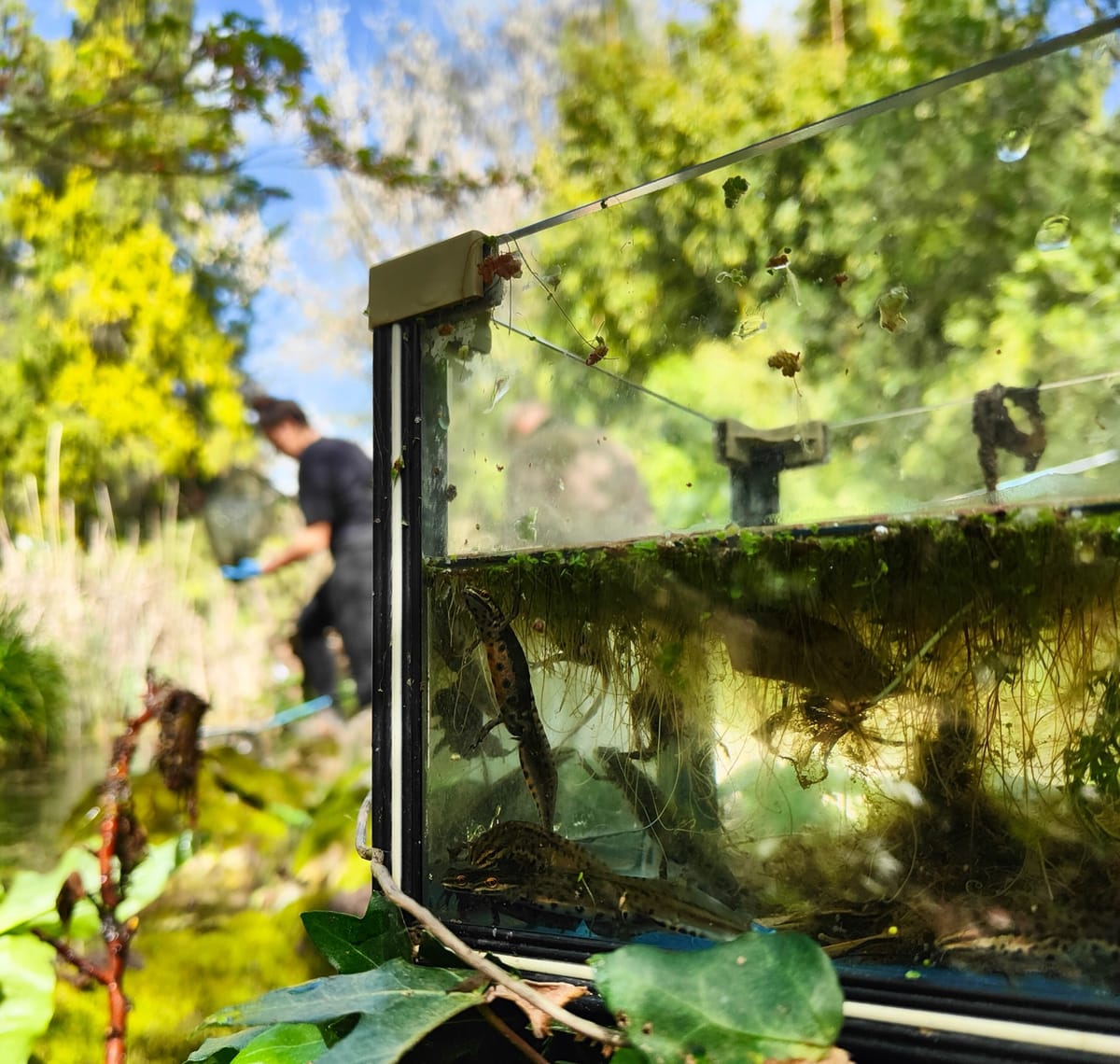
A study, research and conservation project on the southern spotted newt (Lissotriton vulgaris meridionalis) in Rome's botanical garden. A small but numerous isolated population in the centre of Rome. A project by the Roman Society of Natural Sciences (SRSN) in collaboration with Progetto Seeds.
In the heart of Rome, among monuments and historic gardens, the presence of amphibians represents an element of extraordinary ecological and cultural value. Their existence in central sites of historical and naturalistic interest demonstrates how biodiversity can coexist with the city, enriching it and making it even more unique in the European landscape.
The research, conservation and communication work we are carrying out on newts in the fountains of the Botanical Garden of Rome marked the beginning of a larger project dedicated to amphibians in Rome. This initiative aims not only to protect species and urban habitats, but also to enhance the ecosystem services they offer, such as natural insect control and environmental quality maintenance.
This type of research also has great potential for communication and education: raising awareness of the presence and role of amphibians means promoting greater awareness of the value of nature in the city. Through information and awareness-raising activities, the project aims to bring citizens, institutions and visitors closer to a natural heritage that is often invisible.