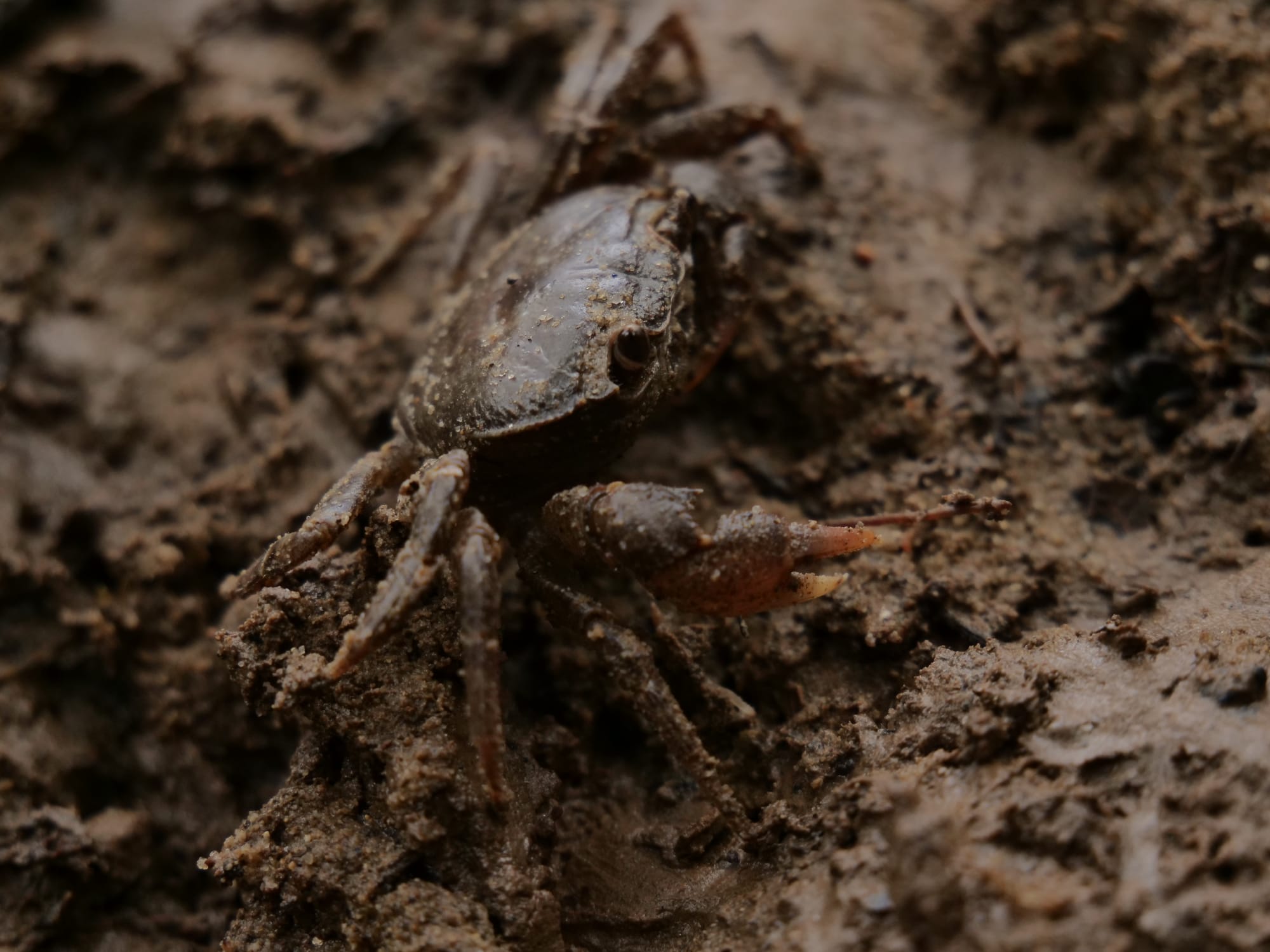
During field surveys across several green areas of Rome, aimed at confirming historical records of amphibians and reptiles and mapping new sites of conservation interest, we made a remarkable discovery: the presence of the freshwater crab Potamon fluviatile inside Villa Doria Pamphilj, one of the largest and most iconic historic parks in the city.
Initially spotted during early 2025, these first individuals prompted a dedicated research effort over the following months. Our surveys confirmed the existence of a widespread and stable population, inhabiting two artificial streams within the park. In the larger of the two watercourses, we recorded over 250 dens along more than one kilometre of stream, with both adults and juveniles observed—clear evidence of active reproduction.
In parallel, we conducted preliminary assessments of the aquatic invertebrate community, which turned out to be relatively poor in species richness, likely due to the artificial nature of the habitat and the presence of invasive species. However, eight dragonfly species were recorded, including the emperor dragonfly (Anax imperator) and the blue-tailed damselfly (Ischnura elegans), both indicators of some degree of habitat quality and connectivity. These observations provide valuable insight into the ecological conditions of the site and its potential for future restoration work.
This discovery is ecologically significant. Potamon fluviatile, listed as Near Threatened on the IUCN Red List and protected under regional conservation laws in Latium, is rarely found in urban settings. Its presence in such a heavily frequented urban park highlights the adaptive capacity of some species to anthropogenic landscapes, and confirms the role of urban and peri-urban green spaces as critical refuges for biodiversity.
However, the population is not without threats. Key pressures include the mismanagement of riparian vegetation, which compromises the stability of stream banks—essential for crab burrow construction—and broader issues such as habitat degradation and disturbance from free-ranging dogs. The limited aquatic biodiversity and the presence of invasive alien species also suggest underlying ecological fragility.
This ongoing study is part of a broader research and conservation project focused on the hidden biodiversity of Rome's green areas. In the coming months, it will be accompanied by concrete protection measures, including awareness-raising activities, ecological restoration, and collaborative interventions with local associations and citizen groups who care for and experience these urban parks on a daily basis.
The case of Potamon fluviatile in Villa Pamphilj serves as a compelling reminder that even in a densely urbanized landscape, wildlife persists—often unseen—and deserves our attention, research, and protection.