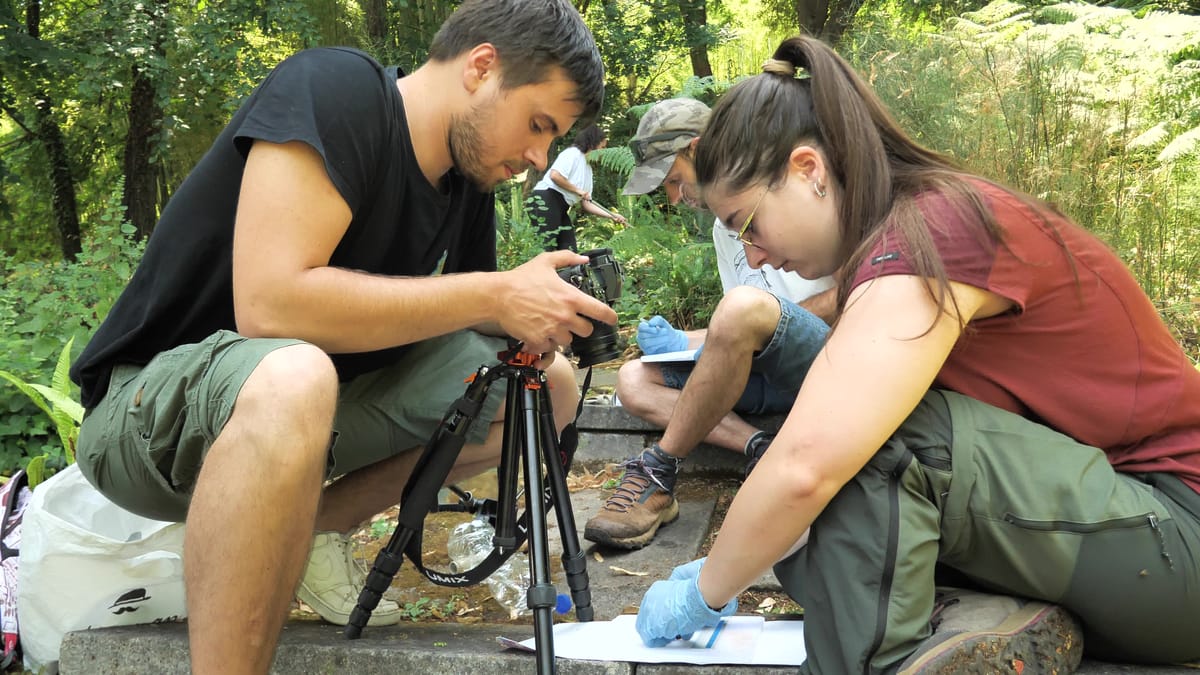
Starting in February 2025, we — a group of young researchers — began studying the smooth newt (Lissotriton vulgaris meridionalis) in the historic ponds and fountains of the Botanical Garden of Rome, with the aim of increasing the local knowledge of this popoluation of smooth newt and contributing to its conservation in an urban environment.
The stages of the work
- We carried out preliminary inspections of all the ponds in the Botanical Garden.
- After obtaining permits from ISPRA, we bagen with field activities:
- manual capture of individuals,
- photography of the ventral pattern for identification,
- measurement and weighing,
- immediate release on site.
- In total, we conducted over 15 monitoring sessions between February and June.
Results and surprises
The data collected showed a surprisingly high density of individuals, well above initial expectations. This result indicates that the ponds are in good ecological condition, despite the strong anthropogenic pressures.
Ongoing interventions
During the summer period, we:
- Analysed all the ponds to assess their suitability as a breeding habitat for amphibians;
- Launched the first localised interventions to eradicate alien species, such as american marsh turtles (Trachemys sp.) and mosquitofish (Gambusia sp.);
- Undertook a number of targeted environmental improvement actions.
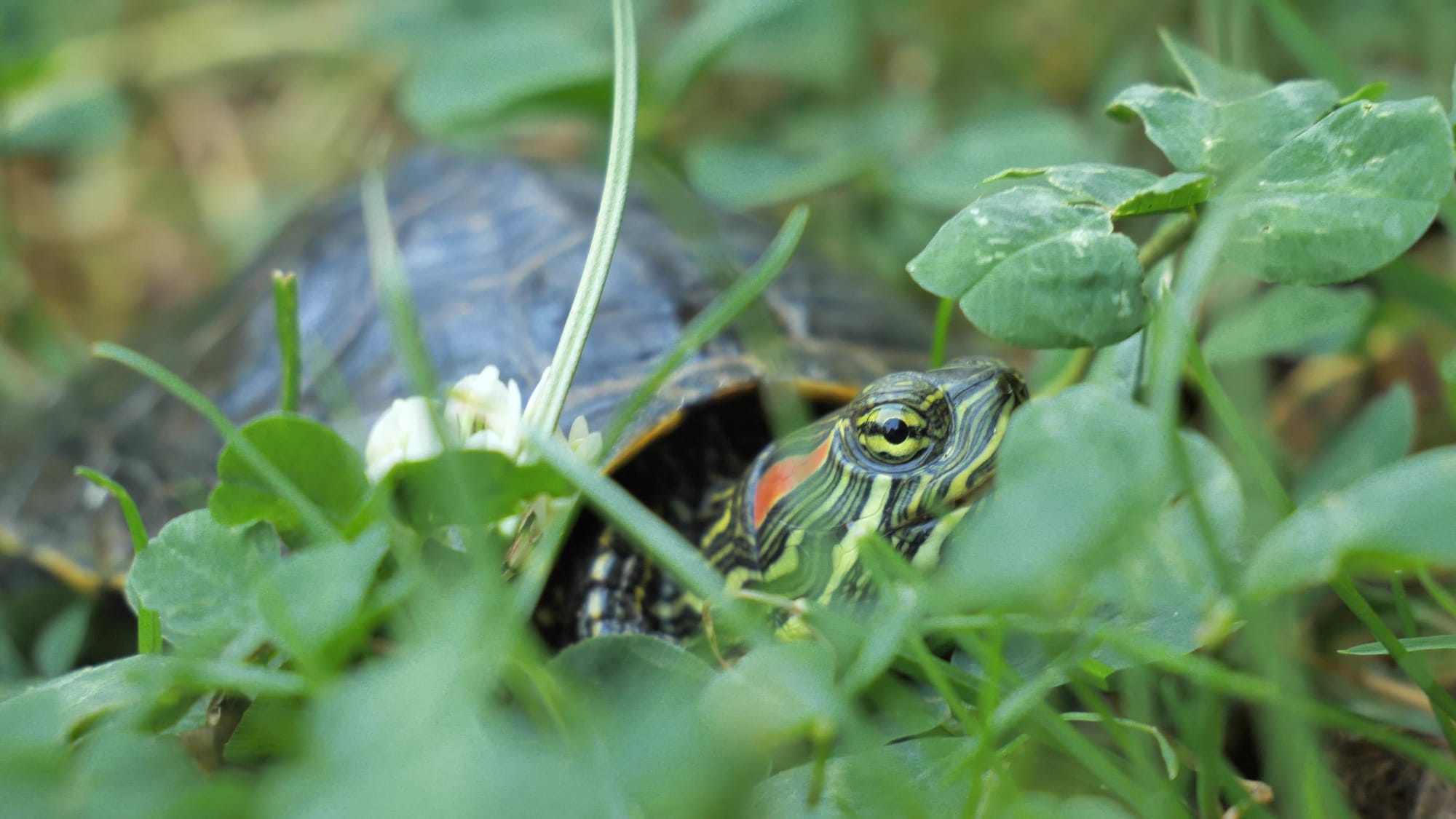
The picture shows a red-eared slider turtle (Trachemys scripta), classified by the IUCN as one of the 100 worst invasive species in the world.
What now?
A second phase of operations is planned for the autumn to enhance the suitability of the ponds for the next breeding season, which for some species, such as the common toad, can begin as early as January and February.